If you are ready to stop driving someone else’s truck and start building your own business, knowing the documents needed for truck financing can save you days of back-and-forth. A lot of approvals stall for one simple reason – the borrower has the income, the route plan, and the motivation, but not the paperwork lined up. When your documents are ready, the process moves faster and your truck can start earning sooner.
Truck financing is not just about credit. It is about proving that you are a real borrower, the truck is a financeable asset, and the deal makes sense for your business. That is good news for many owner-operators and growing fleets, because strong documentation can help tell your story even if your credit profile is not perfect.
The core documents needed for truck financing
Most lenders start with a basic package. The exact list can vary depending on whether you are a first-time buyer, an established business, or a fleet adding units, but the foundation is usually the same.
You will almost always need a government-issued photo ID, such as a driver’s license, to verify who you are. If the truck will be financed through a business, lenders may also ask for your business formation documents. That can include articles of organization, articles of incorporation, or a business license, depending on how your company is set up.
Proof of income is another major piece. For some borrowers, that means recent bank statements. For others, it could mean tax returns, profit and loss statements, settlement statements, or 1099s. If you are already operating, lenders want to see that money is coming in consistently enough to support the payment.
You may also need proof of residence, proof of insurance or an insurance quote, and a voided check for the bank account tied to the deal. If there is a down payment involved, lenders often want to confirm where those funds are coming from and that they are available.
Then there is the truck itself. A buyer’s order, invoice, or purchase agreement is typically required. If you are buying from a dealer, this document usually includes the year, make, model, VIN, mileage, sale price, and any fees. If you are buying from a private seller, the documentation may need to be more carefully prepared because lenders want clean, complete details.
Why lenders ask for these documents
Every document serves a purpose. ID helps prevent fraud. Income documents help lenders estimate your ability to repay. Business records show whether you are applying as an individual or as a commercial entity. The truck paperwork confirms the value and condition of the asset being financed.
This matters because truck financing is part borrower review and part equipment review. A borrower with steady deposits and a clear business plan may still hit friction if the truck has high mileage, title issues, or incomplete seller paperwork. On the other hand, a strong truck deal can sometimes help a borrower whose credit is less than ideal.
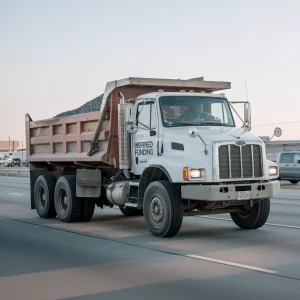
That is one reason specialized commercial lenders tend to be a better fit for trucking than general banks. They understand that a used dump truck, day cab, or sleeper may still be a strong revenue-producing asset if the deal is structured correctly.
Documents needed for truck financing if you are self-employed
A large share of trucking borrowers are self-employed, and that changes the paperwork slightly. If you are an owner-operator or independent contractor, you may not have pay stubs in the traditional sense. Instead, lenders usually look at bank statements, 1099s, tax returns, or settlement sheets to understand your earnings.
Consistency matters more than perfection. If your income swings month to month, that does not automatically kill the deal. Trucking income often moves with routes, seasonality, and fuel conditions. What lenders want to see is a pattern that suggests you can handle the payment and still run the business.
If you have been in business for less than two years, expect more attention on your recent cash flow and your industry background. A first-time buyer with limited time in business may still qualify, but a lender may want a stronger down payment, cleaner bank statements, or more detail about the truck’s intended use.
What first-time buyers should have ready
First-time buyers often assume they need a perfect file to get approved. That is not always true. What you do need is a complete and honest one.
If this is your first truck purchase, be ready with your CDL if applicable, your driver’s license, your proof of income, and recent bank statements. If you have been driving for a company and are now moving into ownership, your work history can help support the application even if you have never financed a truck before.
It also helps to have basic deal details prepared before you apply. Know what type of truck you want, what price range fits your budget, how much you can put down, and whether you are buying through your business or in your own name. The clearer your plan, the easier it is to match you with the right financing structure.
Additional paperwork for business and fleet borrowers
If you are buying under an LLC or corporation, lenders may ask for an EIN confirmation letter, business bank statements, and documents showing who owns the company. Fleet operators may need to provide more detail because the lender is reviewing a broader operation, not just one truck.
That can include current fleet schedules, business financials, or proof of existing insurance coverage. If your company already has financed equipment, lenders may also look at your payment history on those accounts. A growing fleet can be a strong sign of business momentum, but only if the numbers show that growth is sustainable.
For established companies, stronger documentation can create better options. You may see more flexibility on structure, terms, and amount financed when the business records clearly support expansion.
Common mistakes that slow down approval
The biggest delay is incomplete paperwork. A blurry ID, missing page from a bank statement, unsigned buyer’s order, or outdated insurance quote can push your file to the side while cleaner applications move first.
Another common issue is mismatched information. If your application says the business is buying the truck but the buyer’s order is in your personal name, that creates a problem. If your bank statements show a different address than your ID, expect questions. These are usually fixable issues, but they cost time.
Borrowers also run into trouble when they pick a truck before checking whether it fits lending guidelines. Age, mileage, condition, and seller type can all affect approval. A truck that looks like a great deal on price may be harder to finance if the equipment does not fit the lender’s program.
How to prepare your documents for faster funding
Speed comes from organization. Before you apply, gather your ID, bank statements, income records, business documents, and truck purchase paperwork in digital form. Make sure each file is clear, current, and complete. Sending everything in one shot usually works better than sending pieces throughout the day.
It also helps to be upfront about anything unusual. If there was a temporary dip in deposits, a recent business start date, or a credit issue in your past, say so early. A good financing partner can often work around challenges, but only if the full picture is clear from the start.
If you are not sure which documents apply to your situation, ask before submitting. That simple step can prevent the kind of avoidable delay that turns a fast approval into a dragged-out process.
What matters more than having a perfect file
Truck buyers sometimes think one missing item means the deal is dead. Usually, it means the lender needs a different way to verify the same thing. No two files look exactly alike, especially in trucking.
A borrower with challenged credit may still get approved with stronger cash flow and a solid down payment. A newer business may still qualify if the operator has relevant driving experience and the truck is a good fit. An established fleet may need more documentation, but it may also gain better leverage because its revenue history is easier to prove.
That is why truck financing is rarely one-size-fits-all. The right lender looks at the full deal, not just one number on one report. Companies like Inspired Funding are built around that reality, which is why they can often help borrowers who feel boxed out by traditional bank rules.
Getting your paperwork together is not busywork. It is one of the fastest ways to turn opportunity into ownership. The right truck can change your income, your schedule, and your long-term business position – and the sooner your documents are ready, the sooner that truck can get to work.