
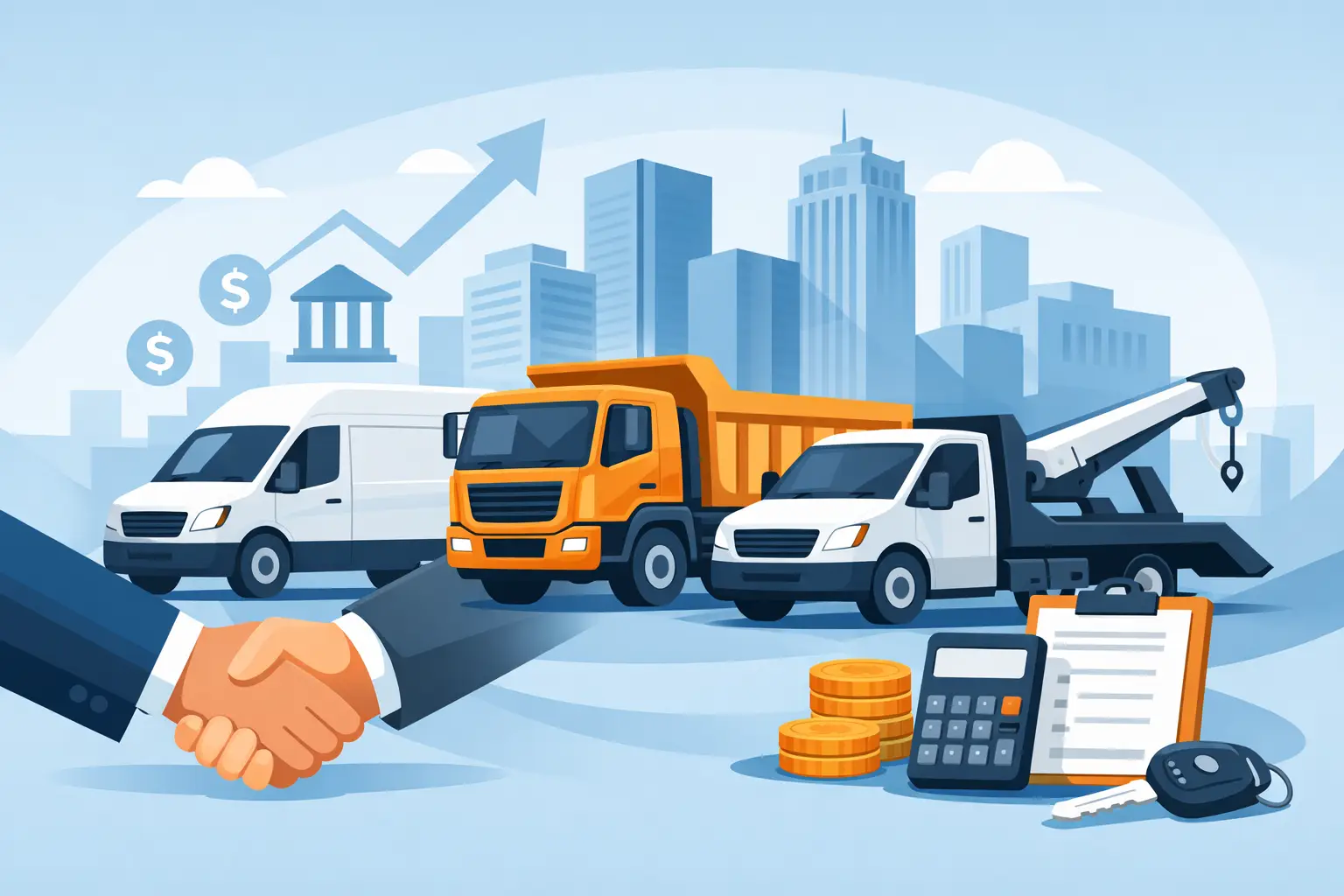

Work Truck Loan Options That Move Your Business
A work truck is not just another purchase. It is the unit that gets crews to the jobsite, carries tools and materials, pulls equipment, and creates billable hours. The right work truck loan options can help you put that asset to work without draining the cash you need for payroll, fuel, insurance, repairs, and the next opportunity.
For an owner-operator, contractor, or growing fleet, the goal is not simply getting approved. It is choosing a payment structure that supports your operation from the first month onward. That means looking beyond the advertised rate and understanding the down payment, term length, truck condition, lender requirements, and total cost of financing.
Which Work Truck Loan Options Fit Your Operation?
The best financing path depends on the truck you need, how long you plan to keep it, your available cash, and the strength of your business profile. A newer utility truck with a predictable service history may qualify differently than an older dump truck, a custom service body, or a work truck being purchased by a first-time business owner.
Commercial equipment loans
A commercial equipment loan is one of the most direct ways to finance a work truck. The truck usually serves as collateral, and once the loan is paid off, you own the asset outright. This can be a strong fit when you expect to keep the truck for years and want to build equity in equipment that supports your business.
Loan terms often vary based on the truck’s age, mileage, purchase price, and intended use. A longer term can lower the monthly payment, which may protect your cash flow. The trade-off is that a longer term generally means more interest paid over time. The right payment is one your business can carry during slow periods, not only during your best month.
Bank and credit union financing
Banks and credit unions can offer competitive terms to borrowers with established credit, strong financial records, and sufficient money for a down payment. If your business has steady deposits, a history of profitable operations, and clean credit, this route may be worth comparing.
The downside is that traditional lenders can be strict. They may require detailed financial documentation, business history, strong personal credit, and a truck that meets their age and mileage limits. Their process can also take longer than a specialized commercial financing program. That delay matters when a contractor has a job lined up or a fleet has a driver waiting for a unit.
Specialized commercial vehicle financing
Specialized lenders focus on the assets and income realities behind commercial transportation and service businesses. That can make a meaningful difference for borrowers who do not fit a bank’s standard approval box, including newer business owners, applicants with challenged credit, and buyers with limited financing experience.
These programs may offer lower down payment options, more flexibility around credit history, and faster approval decisions. At Inspired Funding, qualifying borrowers can access programs with down payments starting at 10%, and there is no minimum FICO score requirement. Approval still depends on the full application, the truck, available documentation, and the overall ability to support the payment, but imperfect credit does not have to end the conversation.
Dealer-arranged financing
Many dealers offer financing through their lending partners. This can be convenient because the vehicle purchase and financing process happen in one place. For a buyer who needs to move quickly, dealer financing may provide a fast path from selecting a truck to taking delivery.
Convenience should not replace comparison. Ask for the full payment details, loan term, down payment, fees, and whether there is a prepayment penalty. You should also know whether the financing is tied to that dealer’s inventory. A dealership-agnostic financing option can give you more freedom to choose the work truck, body style, and seller that best fit the job.
Lease financing
A lease can provide lower upfront costs or a more manageable monthly payment in some situations. It may work for businesses that want to upgrade equipment frequently or preserve capital for operations. But lease terms deserve close attention, especially if you expect to put high mileage on the truck or need to customize it with racks, tool storage, liftgates, service bodies, or towing equipment.
Before signing, confirm who is responsible for maintenance, whether mileage limits apply, what happens at the end of the lease, and whether you have a purchase option. Leasing can be useful, but ownership financing is often a better fit when the truck will be a long-term, heavily used business asset.
Working capital alongside truck financing
A truck payment is only one part of putting a new unit into service. Insurance deposits, registration, tax, fuel, equipment, repairs, and payroll can create pressure before the truck generates its first dollar. Some businesses use working capital to cover those startup or expansion costs while keeping the vehicle loan focused on the truck itself.
This approach can make sense when it protects operational cash. It does not make sense if it pushes the business into payments that its current revenue cannot support. Match your funding plan to a real operating budget, not just the amount a lender may be willing to approve.
What Lenders Look for Beyond Your Credit Score
Credit matters, but it is rarely the whole picture in commercial vehicle financing. Lenders also consider the value and condition of the truck, your down payment, the type of work you perform, time in business, bank activity, and the expected payment relative to your income.
A first-time buyer may not have years of business tax returns, but they may have industry experience, a commercial driver’s license, a job pipeline, or verifiable income that helps tell the story. An established contractor may have uneven credit after a difficult year but still show steady invoices and demand for services. The strongest application makes it easy to see how the truck will produce revenue.
The truck itself also matters. A well-maintained late-model unit may be easier to finance than an older truck with high mileage or a complicated title history. If you are buying used, review maintenance records, inspect the truck carefully, and confirm that the purchase price matches its condition and market value. A cheap truck can become an expensive decision if it spends more time in the shop than on the road.
Choose a Payment That Leaves Room to Operate
Do not choose a loan based on monthly payment alone. A low payment can come from stretching the term, while a short term may create a payment that is unnecessarily hard on your cash flow. Look at the full picture: total financed amount, rate, term, down payment, fees, insurance cost, and the income the truck is expected to generate.
Start with a conservative monthly revenue estimate. Then subtract fuel, labor, maintenance, insurance, permits, taxes, and other fixed expenses. The remaining margin needs to cover the truck payment while leaving room for unexpected repairs and slower weeks. If the numbers only work under perfect conditions, the payment is too aggressive.
A larger down payment can reduce the loan balance and monthly obligation, but do not put every available dollar into the purchase. Keeping a reserve for repairs, insurance, and operating expenses may be more valuable than shaving a small amount off the payment. The best structure balances ownership, affordability, and working cash.
Prepare for a Faster Approval Process
A clean, complete application helps financing move faster. Have your driver’s license or identification, business information, proof of income or bank statements, and details on the truck you want to buy ready before you apply. If you already have a buyer’s order, VIN, mileage, year, and seller information, provide them upfront.
Be direct about your credit history and your business stage. The right financing partner is not looking for a perfect story. They are looking for a workable deal with an asset that supports your operation. Accurate information avoids back-and-forth, gives the lender a clearer picture, and gets you closer to a decision.
If you are comparing offers, compare the same numbers. One lender may show a lower payment because the term is longer. Another may require more down but offer a lower total cost. Ask questions until you understand what you are signing and how the payment fits your plan.
The right truck can help you take on larger jobs, serve more customers, and stop relying on equipment that limits your schedule. Choose financing that gives your business room to work, then put that truck on the road and let it earn its place in your operation.