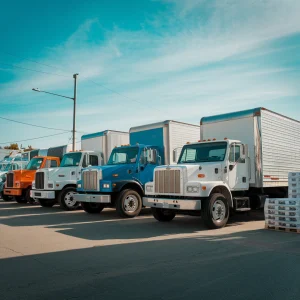
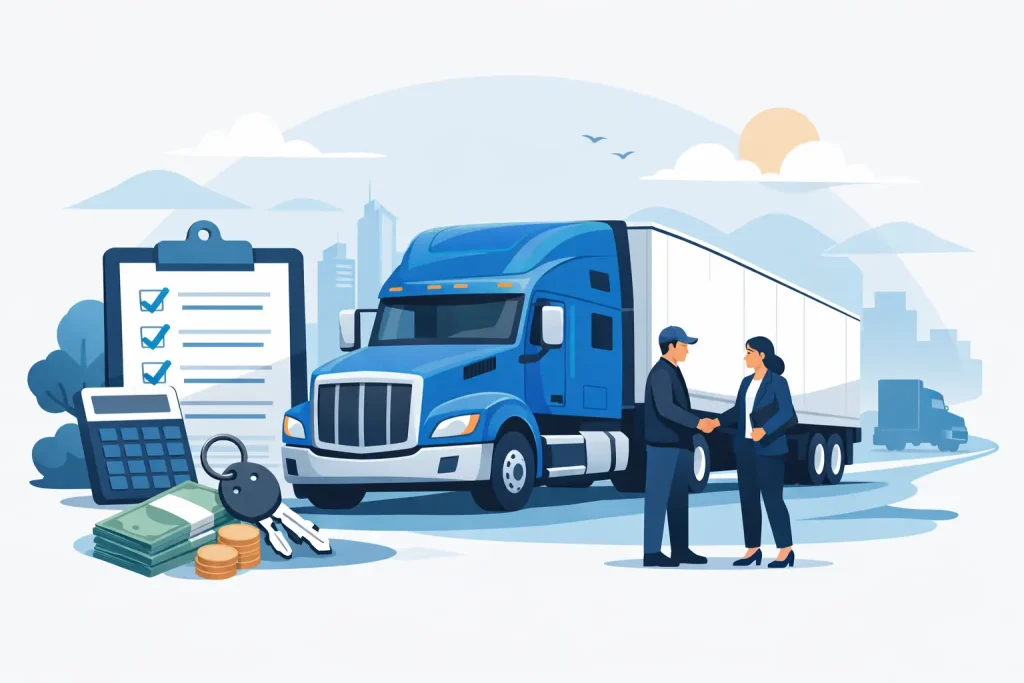
The move from driving someone else’s equipment to owning your own truck can change your income, your schedule, and your future. But the wrong truck payment can put pressure on your business before the first load pays. Learning how to buy your first semi truck means looking beyond the sticker price and choosing equipment and financing that give your operation room to grow.
Start With the Work You Plan to Haul
Do not shop for a truck just because it looks good on a lot. Start with the freight you expect to run. A dry van owner-operator may need a different setup than someone hauling regional freight, heavy equipment, refrigerated loads, or construction materials.
Think about your lanes, typical load weights, home time, and whether you will run local, regional, or over the road. A day cab can make sense for short-haul work and daily home time. A sleeper cab may be the better business tool if you are running long distances and need flexibility to take higher-paying loads farther from home.
The truck should fit the work, not force you into work that does not fit the truck. That decision affects fuel use, maintenance costs, insurance, resale value, and the loads you can accept.
Build a Budget That Includes More Than the Truck Payment
A first-time buyer’s biggest mistake is focusing only on the monthly payment. Your payment matters, but it is just one line in the cost of operating a truck.
Before you choose a price range, estimate your full monthly operating picture. Include the truck payment, fuel, commercial insurance, maintenance, tires, permits, registration, electronic logging device costs, parking, and a reserve for unexpected repairs. If you are leasing onto a carrier, review the deductions and requirements in that agreement as well.
Your down payment also deserves attention. A larger down payment can lower the amount financed and reduce the payment, but draining every dollar you have available can leave you exposed when the truck needs work. The goal is not to put every available dollar into the purchase. The goal is to buy the truck while keeping enough working capital to operate it.
For many new owner-operators, a practical target is to have money set aside for initial insurance costs, registration, a repair reserve, and several weeks of operating expenses. Freight revenue can be strong, but payment timing is not always immediate. Cash flow gives you staying power while your business gets moving.
Choose New, Used, or Older Equipment With Your Risk Tolerance in Mind
New trucks offer newer technology, lower initial mileage, and potential warranty coverage. They also come with higher purchase prices and usually higher payments. If you have strong freight opportunities and enough room in your budget, newer equipment can be a smart long-term move.
Used trucks can lower the purchase price and make ownership more accessible. The trade-off is that condition varies widely. A well-maintained used truck with service records may be a better buy than a newer truck with a neglected history.
Older trucks can look attractive because the price is lower, but low price does not automatically mean low cost. An older truck with major engine, transmission, emissions, or aftertreatment issues can take your business off the road and consume your repair reserve quickly. First-time buyers should be especially careful about buying a truck based only on mileage or appearance.
The right choice depends on your budget, the freight you plan to haul, and how much repair risk your business can handle. There is no single perfect model year. There is only equipment that fits your plan and equipment that does not.
How to Buy Your First Semi Truck Without Skipping the Inspection
Never assume a truck is ready because it is clean, recently detailed, or sitting on a reputable dealer’s lot. A pre-purchase inspection is one of the smartest expenses you can make before signing paperwork.
Have an independent diesel technician inspect the truck whenever possible. Ask for a full diagnostic scan and a review of the engine, transmission, clutch or automated manual transmission, brakes, tires, suspension, frame, cooling system, electrical components, and emissions system. For trucks with diesel particulate filters and DEF systems, pay close attention to fault codes and maintenance history.
Request maintenance records, oil analysis records if available, and documentation for major repairs. Check whether the truck has been used in heavy-haul, oilfield, or high-idle applications, since those operating conditions can affect wear differently than standard highway miles.
A good inspection also creates negotiating power. If the truck needs tires, brakes, or a repair soon, you can either negotiate the price or walk away. Walking away from the wrong deal is not losing. It is protecting your business.
Get Financing in Place Before You Commit to a Truck
Pre-approval gives you a clearer buying range and helps you shop with purpose. Instead of spending days looking at trucks you may not be able to finance, you can focus on equipment that fits your approval and operating plan.
Traditional banks can be difficult for first-time buyers, especially if you have limited business history, inconsistent income documentation, or credit challenges. That does not mean truck ownership is out of reach. Commercial vehicle financing programs are built for real trucking situations, including drivers moving from company work into ownership and owner-operators ready to replace rental or lease costs with an asset of their own.
Be prepared to provide basic information about yourself, your business if you have one, the truck you want to purchase, and your expected use. A lender may also review your driving experience, recent bank statements, income history, down payment, and the equipment itself.
Do not choose financing on payment alone. Review the term length, total amount financed, down payment requirement, and any conditions tied to the approval. A longer term may create a lower monthly payment, but it can also mean paying more over time. The best structure is one that supports monthly cash flow without putting you in a position where you owe more than the truck is worth for too long.
Plan for Insurance Before the Purchase Is Final
Commercial truck insurance can be one of the largest upfront costs in your first year of ownership. New authorities often face higher premiums than operators leased onto established carriers. Your equipment choice, driving history, cargo type, lanes, and years of experience can all affect what you pay.
Get insurance quotes early, not after you have committed to a specific truck. Some policies require a down payment before the truck can be released, and lenders generally need proof of coverage before funding can be completed.
If you are leasing onto a carrier, ask exactly what insurance they provide and what remains your responsibility. Physical damage coverage, bobtail coverage, cargo coverage, and liability requirements can differ. Know the details before you count on a certain monthly number.
Set Up the Business Side Before Your First Load
Buying the truck is not the finish line. It is the start of a business that needs systems. You will need the right registrations, plates, permits, tax planning, maintenance scheduling, and a plan for finding and managing freight.
Before taking delivery, make sure you have these essentials handled:
- A clear plan for authority, carrier lease-on, or dispatch arrangements
- Insurance coverage that meets your lender, carrier, and operating requirements
- Registration, plates, permits, and compliance items for your planned lanes
- A maintenance reserve and a trusted repair shop or roadside service option
- A realistic fuel and cash-flow plan for the first 30 to 60 days
Keep your records organized from day one. Separate business and personal spending when possible, track every expense, and understand your cost per mile. The owner-operators who last are not always the ones who gross the most in a strong week. They are the ones who know what it costs to keep the wheels turning.
Buy for Revenue, Not for Ego
Your first semi truck does not need to be the flashiest truck in the lot. It needs to be dependable, financeable, insurable, and capable of producing revenue. The best first truck is the one that puts you in control without overwhelming your cash flow.
If you have found the right equipment but need a practical path to ownership, Inspired Funding can help you pursue commercial truck financing with flexible options built around working operators. Take the time to run the numbers, inspect the truck, and protect your reserve. Then make the move with a truck that supports the business you are building.