Your truck is not just transportation. It is the asset that lets you book freight, build customer relationships, and create a business you control. That is why the semi truck loan vs lease decision deserves more than a quick look at the monthly payment. The right option depends on how long you plan to run the truck, how much cash you can put down, your credit profile, and whether ownership is the goal.
For many drivers moving from company work into owner-operator status, financing a truck is the clearer path to equity and long-term control. For others, leasing can offer a shorter commitment or a way to get into newer equipment with less responsibility at the end of the term. The best answer is the one that keeps your operation profitable while putting you in position to grow.
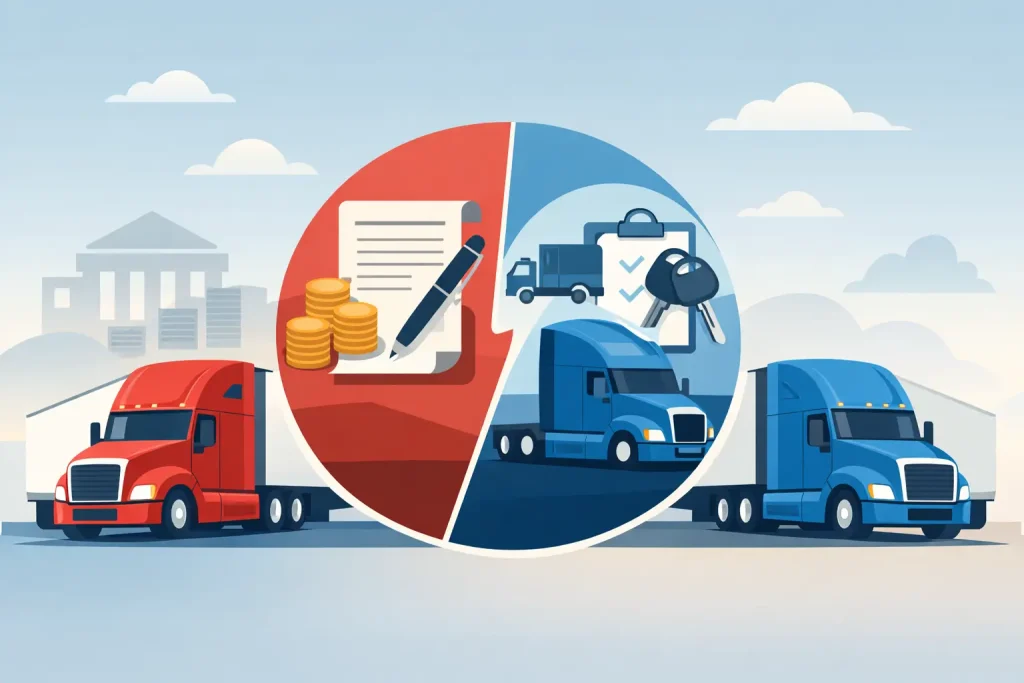
Semi Truck Loan vs Lease: The Core Difference
A semi truck loan is financing used to purchase the truck. You make a down payment, repay the loan over an agreed term, and own the truck once the balance is paid off. The vehicle is an asset on your business books, and its value can help support future borrowing or trade-in plans.
A lease gives you the right to use the truck for a defined period. Depending on the lease structure, you may return the truck at the end, buy it for a predetermined amount, or have an option to purchase it. You are paying for use and depreciation during the lease term, not necessarily building ownership from day one.
The distinction matters because a lower payment does not always mean a lower total cost. A lease may preserve cash in the short term, while a loan may create more value over the years you operate the truck. Before signing either agreement, look at the full picture: payment, down payment, interest or lease charges, maintenance responsibility, mileage limits, end-of-term obligations, and the truck’s likely resale value.
When a Semi Truck Loan Makes More Sense
A loan is often the better move when you intend to run the truck for years and want your monthly payments to lead toward ownership. Once the loan is paid down, you have an asset you can keep operating, sell, trade, or use as part of your next equipment purchase.
Ownership also gives you more control. You are not working around lease mileage caps or return-condition requirements. That flexibility matters for drivers whose routes change, who take on high-mileage freight, or who want to customize equipment for specific loads.
For an owner-operator, a loan can turn a monthly expense into a business-building payment. A well-maintained truck with equity can strengthen your position when you are ready to add a trailer, upgrade equipment, or bring on another driver. The same principle applies to fleet owners. Buying units can build a base of assets instead of leaving your business dependent on rolling lease renewals.
A loan is especially worth considering if you are shopping for a used truck with a solid maintenance history. A used truck can cost less upfront than a new model, and the right financing structure may make ownership attainable without draining the cash you need for insurance, fuel, repairs, permits, and working capital.
That said, ownership puts more long-term responsibility on you. As the truck ages, repairs can become more frequent and expensive. A truck payment is only one part of the cost of operation. Build a reserve for maintenance instead of assuming every dollar after the payment is profit.
Loan advantages for growth-minded operators
With a truck loan, you generally gain equity as the balance decreases. You can use the truck without worrying about mileage restrictions, and you have more freedom to keep it beyond the payment term. If the equipment is reliable, running a paid-off truck can dramatically improve your monthly cash flow.
The trade-off is that payments may be higher than a comparable lease payment, particularly if you choose a shorter term. You may also need a down payment. But a down payment can be a practical investment in lowering your balance, improving approval options, and putting you closer to full ownership.
When Leasing May Be the Better Fit
Leasing may make sense when you prioritize access to newer equipment, shorter replacement cycles, or predictable use over long-term ownership. Some operators prefer to upgrade every few years rather than manage an aging truck. That can be appealing when newer fuel efficiency, safety features, or warranty coverage are central to your operation.
A lease can also help preserve cash at the start. If your business is new and you need funds available for authority costs, insurance deposits, fuel cards, trailer needs, and early operating expenses, a lease may offer a manageable entry point. The exact terms still matter. Lower upfront costs can be offset by purchase options, fees, or restrictions later.
Lease structures are not all the same. A lease with a fair market value purchase option works differently from a lease that includes a fixed buyout. Some agreements are designed for returning the truck; others are designed for eventual ownership. Never assume you will own the vehicle just because you made payments for several years. Read the end-of-term language carefully before you commit.
Watch for mileage and return requirements
If you lease, know how much you expect to drive. A truck that stays on regional routes has different mileage demands than one running coast to coast. Exceeding mileage limits or returning a truck with excessive wear can create costs that were not obvious when you focused only on the payment.
Also ask who handles maintenance, warranty repairs, tires, and downtime. A newer leased truck may reduce some repair uncertainty, but it does not eliminate operating costs or lost revenue when the truck is off the road. Get clear answers, in writing, about your obligations.
Compare the Numbers That Actually Affect Your Business
The payment is important, but it should not be the deciding number. Compare your likely total cost over the period you expect to operate the truck. If you plan to keep a truck for seven years, a three-year lease that requires a new agreement may cost more than purchasing and keeping equipment after the loan is paid down.
Start with your available down payment and monthly budget. Then account for insurance, fuel, maintenance, tires, registration, permits, taxes, and a downtime reserve. If you are buying a used truck, include a realistic repair fund from the beginning. If you are leasing, include any acquisition fees, disposition fees, mileage charges, and purchase-option costs.
Your revenue plan should drive the decision. A driver with a steady dedicated contract may be comfortable taking on ownership because income is more predictable. A newer operator still testing lanes and customers may value the flexibility of a shorter commitment. Neither choice is automatically right. The better choice matches your freight plan and your tolerance for risk.
Credit Challenges Do Not Have to End the Conversation
Traditional banks often focus heavily on credit scores, time in business, and large cash reserves. That can shut out capable drivers who have the work ethic and freight opportunity to succeed but do not fit a standard lending box.
Commercial vehicle financing can be more flexible when the lender understands the asset and the industry. Your credit history matters, but so do your down payment, truck selection, operating experience, income, and the overall strength of the deal. A first-time buyer or challenged-credit applicant may have options that a conventional bank does not make obvious.
The goal is not to force approval into a payment that strains your operation. It is to structure funding around a truck you can afford to run. A realistic payment leaves room for the unpredictable costs that come with trucking and gives you a better chance to stay in business long enough to build credit and equity.
Questions to Ask Before You Sign
Ask whether the agreement is a loan, a lease with a purchase option, or a lease designed for return. Confirm the exact down payment, payment amount, term length, and total amount you will pay. Find out whether there are prepayment penalties, mileage limits, maintenance requirements, or fees at the end of the term.
For a loan, ask about the truck’s age and mileage guidelines, whether a warranty is available, and how the lender handles older equipment. For a lease, ask what it costs to buy the truck at the end and what happens if you need to exit early. These questions protect you from building your business around assumptions.
It also helps to separate the truck decision from the approval decision. Do not choose a truck simply because it is the first one a lender says yes to. Look at service records, engine history, tire condition, aftertreatment system health, and whether the truck fits the loads you plan to haul. The best financing cannot fix a truck that spends too much time in the shop.
Choose the Funding Path That Supports Your Next Move
If your priority is building equity, controlling your equipment, and keeping a truck after the payments end, a loan is usually the stronger long-term play. If you need newer equipment, a shorter commitment, or want to preserve more cash at launch, leasing may be worth considering. The answer comes down to your operating plan, not a one-size-fits-all rule.
The right truck can move you from driving someone else’s route to building your own business. Bring your real numbers, your freight goals, and your ownership plan to the conversation. Inspired Funding helps trucking professionals explore practical financing options, including low-down-payment programs, so the path from opportunity to equipment can stay within reach.